The consultancy market is changing
Clients are choosing partnership over prestige, and bigger is no longer better. Until recently, the phrase “no one will get fired for hiring McKinsey” was a statement of fact. However, declining trust in the large consultancy model has been fueled by recent failures, including high-profile cases in which the Big Four and others have failed to demonstrate the value of their strategic advice.
As a result of these failures, the UK government has committed to significantly reducing spending on external consultants, aiming to cut consultancy spend by £1.2bn by 2026. Businesses are adopting similar measures.
The lack of trust in large consultancies is compounded by reports of AI misuse and a lack of transparency in how top-tier firms incorporate AI into their processes.
The fight to shift perceptions
To address this crisis of confidence, big consultancies are turning to their brands to rebuild trust. PwC launched a rebrand this year, and EY updated its identity and tagline in 2024. However, amid job cuts and the steepest decline in graduate recruitment in recent years, these actions come across as superficial.
But let’s not be unfair – a rebrand or tagline alone does not restore trust. Deep organisational change rebuilds trust, and larger organisations need even more time to achieve this.
While the industry’s leading…and largest consultancies scramble to reset and restore faith (Deloitte calls this ‘The Trust Age’), there’s an opportunity for challenger consultancies there’s an opportunity for challenger consultancies to use brand as a strategic asset, leveraging the dominant players’ scale and reputation against them.
How does this work?
Think of Avis: for decades, it was America’s no. 2 car rental brand.
Rather than trying to beat Hertz at its own game, Avis made a virtue of being number two with its ‘we try harder’ campaign. Using their unique position to leverage their competitors’ strength and dominance against them and demonstrate their value to their customers. A brand strategy that reframed its position as an advantage.
If the leading consultancy firms are losing trust due to a reputation for excessive fees, lack of transparency, and, at times, questionable delivery, how can challenger consultancies respond?
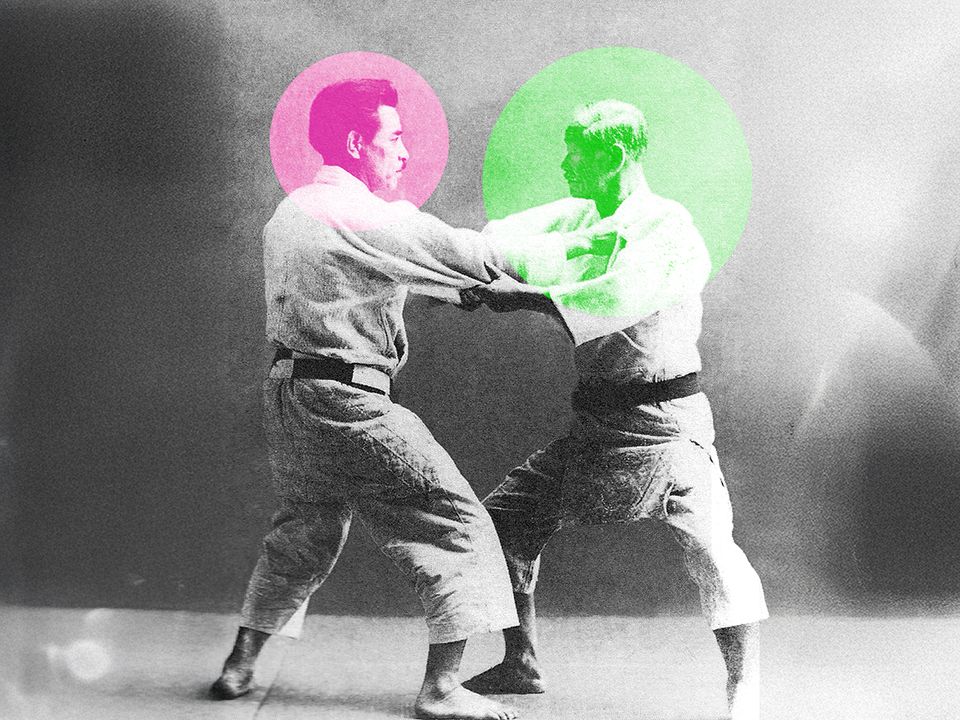
Judo moves – or – depositioning the competition
Where large consultancies rely on proprietary, impersonal frameworks, challengers can differentiate by being more human—co-creating solutions with clients and focusing on people-centred, solution-driven approaches where clients own the outcome.
Whatever their response, challenger consultancies must act authentically. Where larger firms are seen as opaque organisations, challengers must build their model and brand around a commitment to more than just fees.
Consultancy brands have the opportunity now to clearly express what they stand for — not just what they deliver. We’ve seen first-hand how effective this can be, with our own clients, Newton and Frontier Economics, demonstrating that a clear brand proposition built around authentic stories, human-centred thinking, and a commitment to their clients’ challenges, leads the way.
Large consultancies still offer lessons worth learning. Deloitte, consistently the strongest professional services brand according to Brand Finanz, has successfully positioned itself based on the impact it delivers, not solely on what they do or how it does.
Opportunity
This is a moment of great upheaval in the consultancy market. The entire consultancy model is experiencing a loss of faith, and potential clients are becoming more discerning in how they choose to engage with consultancy. They want more transparency, accountability, and a higher level of partnership.
The consultancy market is experiencing upheaval. The consultancy model is facing a loss of faith, with potential clients now more discerning in how they choose to engage with consultancy. Demanding greater transparency, accountability, and higher levels of partnership.
Scale is no longer the default signal of trust. Brand is.
And challenger consultancy brands have the opportunity, and momentum to reshape the narrative.
Read the full article on Management Today → Challenger consultancies
Footnote:
*Judo strategies are widely recognised as effective methodologies for smaller businesses to compete against larger or more powerful ones. The principles of judo according to its founder are ‘maximum efficiency with minimum effort. In effect, using your competitors’ strengths against them, by redirecting and evading and redirecting to cause them to lose balance, thereby making it possible for smaller competitors.