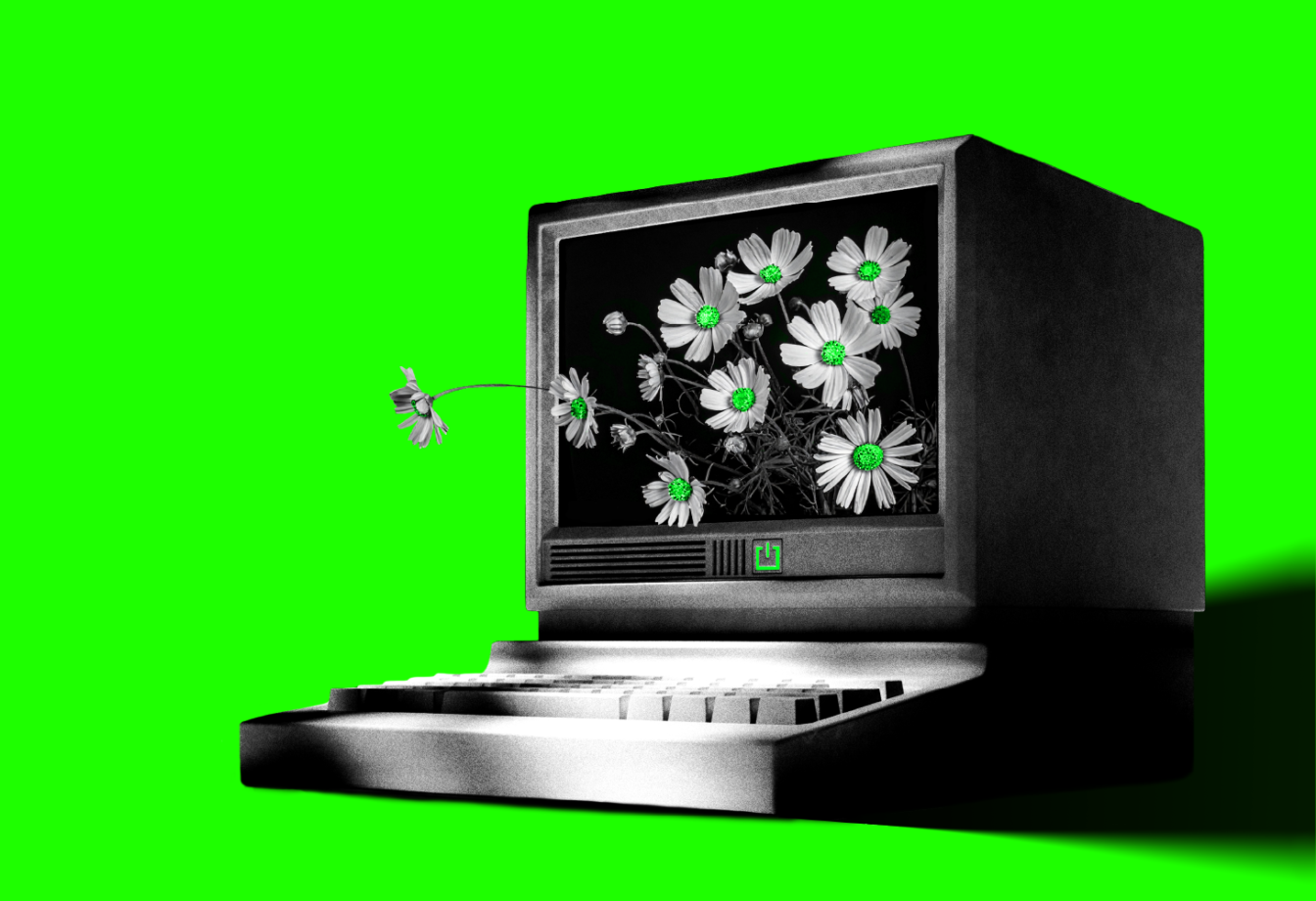
In an industry where tools are becoming increasingly accessible and content can generated in seconds, it’s fair to ask a difficult question:
If everyone has access to the same technology, what makes creative work distinctive?
It’s a topic that kept surfacing throughout September. Across branding, advertising, publishing and digital design, we saw examples of organisations wrestling with a common challenge: how do you stay relevant without losing what makes you recognisable in the first place?
The answer isn’t necessarily found in technology. More often, it’s found in point of view.
The Value of a Signature Perspective
A recent profile of photographer Szilveszter Makó explored the commercial appeal of creative auteurs, asking what happens when a distinctive style becomes something that can be commissioned on demand. It’s an interesting question for the creative industry more broadly. As creative tools become more powerful and widely available, originality is becoming less about execution and more about perspective.
Anyone can access similar platforms software and AI tools. What increasingly separates one piece of work from another is the thinking behind it. The strategic insight, the creative judgement and the unique lens through which a problem is viewed.
Technology may accelerate creation, but it can’t replace a genuinely original point of view.
Different Approaches to the Same Challenge
The growing influence of AI has prompted very different responses from the creative community.
Some designers are pushing back. One example is Decoy Font, a typeface specifically designed to confuse AI systems and prevent content from being read accurately by automated tools. It’s fascinating demonstration of how design can be used to challenge the technology shaping our industry.
Others are embracing AI as a creative material in its own right. Creative studio Illo has developed experimental tools. It’s a fascinating demonstration of how design can be used to challenge the technology shaping our industry.
Neither approach is right or wrong. Both reveal something important: the real opportunity lies not in the technology itself, but in what creatives choose to do with it.
Evolution Doesn’t Have to Mean Reinvention
One of the strongest creative lessons this year has come from brands that understand the value of their existing assets.
Rather than launching a radical design, Guinness demonstrated how subtle, intelligent use of well-known brand asset can modernise perception without sacrificing recognition. The result feels contemporary while remaining unmistakably Guinness.
A similar principle can be seen in Penguin Random House’s 90th anniversary celebrations. Instead of reinventing the brand, the campaign leaned into its heritage, finding fresh ways to engage audiences through the stories, ideas and cultural impact that have defined Penguin for decades.
For brands facing pressure to stay current, there’s an important reminder here: progress doesn’t always require starting over. Sometimes the most powerful strategy is to build on what people already know and trust.
Designing for Meaning, Not Just Attention
Alongside conversations around technology and branding, several campaigns highlighted another trend that’s continuing to gain momentum: using creativity to make complex issues tangible.
One standout example came from housing organisation Riksbyggen and BBDO Nordics, whose micro-home installation visualised the realities of the Swedish housing crisis by showing exactly how much living space young people can afford in urban areas. The idea transformed an abstract statistic into a physical experience that audiences could engage with and understand immediately.
This reflects a broader shift we’re seeing across communications. Audiences are increasingly resistant to messages that simple tell them what to think. The most effect campaigns create experiences that allow people to feel, understand and draw their own conclusions.
What This Means for Brands
As AI continues to evolve and creative production becomes more accessible, the temptation will be to focus on speed, volume and efficiency.
Those things matter.
But the organisations creating the most memorable work are still investing in the fundamentals: clear thinking, strong creative judgement and a distinctive point of view.
While tools will continue to change, originality remains remarkably difficult to replicate.
In a word where almost anything can be generated, that may become the most valuable creative asset of all.